


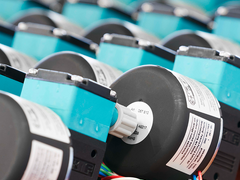
The Benefits of Diaphragm Pump Technology
Discover how KNF diaphragm pumps, known for their precise and versatile transfer of liquids and gases, give manufacturers a competitive edge by optimizing their applications.
Read more

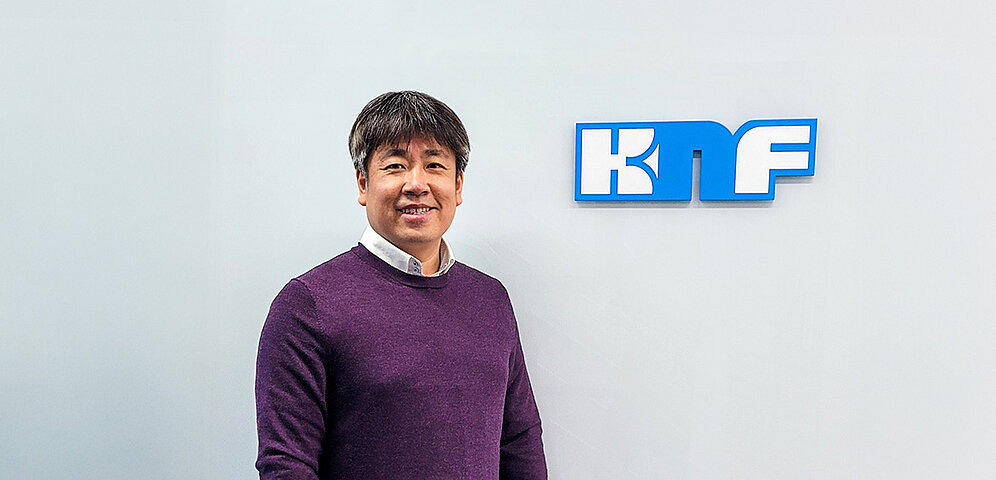
KNF pumps are important for many emerging energy industries. Fuel cell applications are of particular interest, as they are a driving force behind a unique and emerging market. Kihan Jin, Product Manager and Sales Engineer from KNF Korea, has a wealth of experience, particularly in hydrogen and fuel cell markets. He shares his knowledge on current developments in these emerging spaces.
I first joined KNF in July of 2014. My journey into sales engineering began during my time in university. At the time, I was studying German language and culture. I had aspirations of working in an international business field, like overseas sales or trading. However, I quickly fell in love with the engineering aspect of the job and decided to pursue that as a career.
Working for KNF allows me to be involved with a wide variety of markets like medical, environmental, semiconductor and, especially, hydrogen and fuel cells. To be good at my job, I need to develop a deep technical understanding of my customer’s systems regardless of application, which is challenging but also very fulfilling.
Fuel cell applications are especially interesting to me because of their complexity, as many of them require both gas and liquid pumps. This gives me the opportunity to work with a variety of products and not just focus on one aspect of the business. It is challenging but rewarding and it makes my job interesting every day.
The hydrogen and fuel cell-markets have so much potential. Both markets are very future focused, and I see hydrogen becoming critically important for energy security worldwide. Anyone with access to the right technology can generate H2 via water electrolysis and transport it fairly easily. That is a major advantage over fossil fuels, which are much more expensive and difficult to access without the right infrastructure. H2 is also much more eco-friendly.
Fuel cells are a very versatile way of generating energy. Stationary systems can be used to power buildings, while smaller systems can be used to power personal or public vehicles. These are applications with a chance to make a positive impact globally by improving sustainability, and I want to use both my expertise and KNF’s products to help them grow.

The market was very small for a long time, but it grew very quickly. The Korean government created the Hydrogen Economy Road Map in 2019, which outlined sustainability goals for the country. The road map was modified in 2022 but continues to drive policy. Among the goals outlined are to source a third of our energy from hydrogen by 2050 and to grow annual consumption of hydrogen power.
This jump-started growth in the Korean fuel cell market, which has become one of the largest in the world. In 2024, South Korea became the first country to exceed one gigawatt of energy available from fuel cells, and the roadmap outlines a goal of 15 gigawatt by 2040. Many of the projects we have with customers are in the early development stages, but our sales to support this industry continue to grow year after year. It is a very exciting time to be a part of the fuel cell market, and it is especially exciting to be a part of it here in Korea.
Two of the most important regulations for stationary fuel cell systems are KGS: AH371 and KS: C8569, which outline basic safety standards. To achieve these standards, fuel cells must pass regular inspections, which include functional testing of individual components and the system as a whole. The inspection has a major focus on safety and tests for things like proper ventilation, emergency shutdown capabilities, and leakage. At minimum, fuel cell systems must meet KGS: AH371 before going to market. Achieving KS: C8569 certification allows systems to carry the Korean government’s official seal of approval.
There are also regulations driving a need for fuel cell systems. One of the biggest is the Zero Energy Building certification. New public buildings larger than 500m2 and private buildings larger than 1,000m2 are required to have more than 24 percent of their energy usage come from renewable sources. Builders are incorporating these systems directly into the infrastructure of new buildings. This is driving a need for high quality fuel cell systems that can meet high energy demands, especially when it comes to commercial buildings.
There are four key advantages KNF pumps have when it comes to hydrogen and fuel cell applications: precisely adjustable flow rates, comprehensive customizability, leak tightness and low maintenance.
Variable flow rate is critical for gas pumps in these applications because fuel cell systems require precise flow of natural gas to the reformer to generate H2, as well as for recirculation of H2 in the stack. Fuel cell system pumps need to have a lower flow rate at startup and increase to a higher flow rate once the system is running at full power, so flow control is essential.

Customization is also essential because the range of needed flow between fuel cell systems is so varied. The demands on flow rate are continuing to increase because it is more cost effective to create one large fuel cell system than it is to create several small ones. KNF has a wide range of products that are able to keep up with these demands.
Being able to offer leak tight pumps is another major advantage we have over our competitors for H2 and fuel cell business. Hydrogen is a volatile gas that can be difficult to handle and leaks easily, so leak tightness is critical. This is especially important considering hydrogen is also a highly explosive gas.

Our pumps also require minimal to no maintenance, which is critical in complex systems. Maintaining pumps in fuel cell systems is expensive and downtime can lead to even further costs. Unplanned downtime is especially problematic in these systems as they are used for power generation. This makes low- and maintenance-free pumps essential.
When it comes to liquid pumps, customization and long service life are the biggest advantages our pumps provide. Most fuel cell systems use liquid pumps to transfer deionized water to the reformer, and the requirements of these systems are very challenging to meet. Our FP series pumps have proven to be strong in these applications, as they are both compact and can be customized to meet our customers’ flow rate needs. A lot of our customers were using plunger pumps for these applications and switched to diaphragm pumps because leak tightness, low pulsation and stable flow rate are so important in fuel cells.
Water electrolysis is becoming very popular in the hydrogen industry. This process generates H2 by using electricity to separate water into hydrogen and oxygen. Generating H2 from ammonia, or NH3, is also becoming more common. There is also a lot of focus on making hydrogen a more practical energy source. People in the industry are trying to develop new ways to handle and transport H2 that will make it more accessible for everyday use.
Fuel cell capacities are increasing, and our customers are focusing more on developing hydrogen fuel cells for mobility and power generation because they generate electricity efficiently and minimize consumption of energy coming from other sources. There is a lot of emphasis on how they can be used in different applications to increase power generation, reduce emissions, and promote a more sustainable future.
We had a major fuel cell company that was using both our gas pumps and a competitor’s pumps in their systems. They were using about 80 % competitor pumps and 20 % KNF pumps, but they were not happy with their system’s performance. We knew we could improve their system if we focused on the superior performance and lower total cost of ownership our pumps could provide. We worked with our Product Centers to build them a custom solution that would meet their needs. They were so satisfied with our products that they switched almost entirely to KNF gas pumps.
This success also led to them asking us to create customized liquid pumps for their systems. Their specifications for those pumps were challenging, but we were able to deliver a product that met their needs this year. The work we did with this customer made me proud because we were able to improve their operations with the quality, performance, and added value of our pumps.

