
Clear Vision: KNF Vacuum Pumps Essential in Cataract Surgery
Cataracts are a common, but life altering condition that many people struggle with daily. But through cataract surgery, patients can regain or substantially improve their vision. KNF vacuum pumps are a key component in the medical devices that perform these precise procedures.

Cataracts are a common condition that adversely affect the sight of anyone they impact. While they are responsible for a substantial amount of vision problems worldwide, surgery is the only effective treatment to remove cataracts. Because eyes are so sensitive, these procedures require precise, reliable, and accurate eye surgical equipment to ensure patient safety. This is why cataract surgical equipment relies on KNF diaphragm vacuum pumps.
Cataract Surgery is The Only Viable Treatment Option
Cataracts occur when proteins in the eye lens break down and reconstitute, causing the lens to become cloudy. This can cause clouded or blurred vision, double vision, or light sensitivity. If left untreated, cataracts can eventually result in partial or total blindness. While they are relatively common, surgery is the only effective treatment for cataracts.
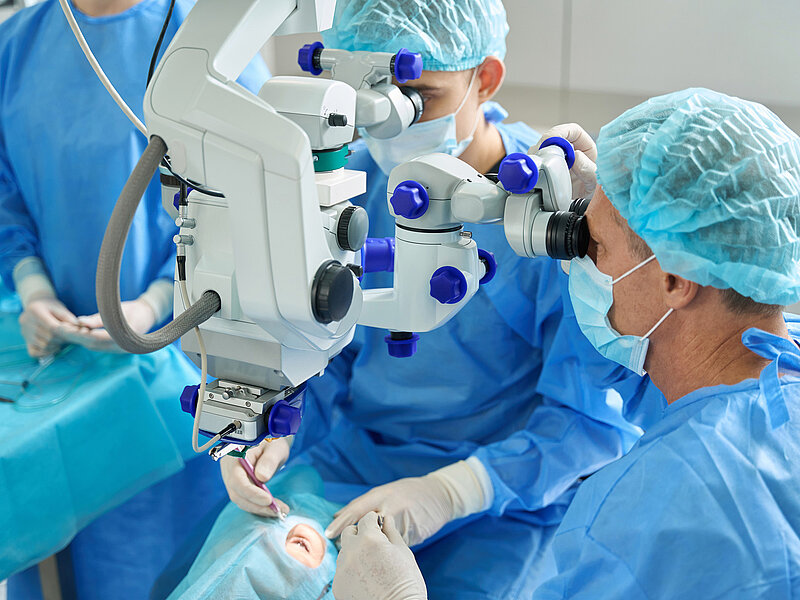
Phacoemulsification is the most common form of cataract removal surgery. This process involves using an ultrasonic probe to emulsify the lens tissue while also breaking down the hard cataract nucleus into smaller pieces. These remnants are then removed via suction, and a new lens is implanted. Some newer procedures use lasers to make more precise incisions before emulsifying the cataracts and suctioning them out. This process requires systems with extreme precision and reliability. Cataract eye surgical equipment often relies on diaphragm vacuum pumps to provide the required performance.
Pumps for Cataract Surgery Are Essential in Multiple Eye Surgery Equipment Roles
Diaphragm pumps play two critical roles in cataract surgery. First, they are essential for aligning the surgical device with the patient’s eye before the procedure. Once the device and eye are aligned and stabilized, the connection between the two needs to be held in place during the procedure via suction. This ensures both the safety of the patient and the accuracy of the surgery. This process requires a pump that provides a moderate, yet consistent and precise vacuum. The pump must also provide long service life and reliability with minimal vibration and low noise.
Once the cataracts have been broken down, the remaining particles need to be removed from the eye before a new lens can be implanted. This process is also facilitated by diaphragm vacuum pumps. Successful removal of cataract particles requires a deep vacuum that is precisely controlled. This ensures the remaining particles are completely removed from the patient’s eye. Because they are used in systems that are close to patients, pumps for cataract surgery need to operate with low vibration and minimal noise.
KNF Offers Versatile Portfolio of Diaphragm Pumps for Cataract Surgery
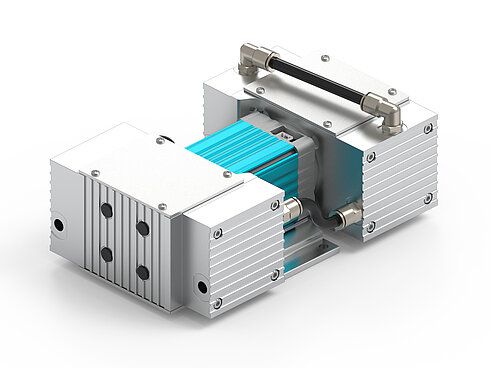
KNF offers a variety of pump options for cataract surgery applications. For debris removal, the N 813 is a strong choice. It offers a maximum vacuum of 0.5 mbar (abs.), maximum flow rate of 13 l/min, and maximum pressure of 0.3 bar (rel.). The N 813 offers consistent, reliable performance, and compact design. It is available with a customizable cutting-edge BLDC motor for precise flow control. Its configuration and motor allow the pump to run at low speed, reducing noise and vibration while also providing the flow and vacuum required of cataract surgery applications.
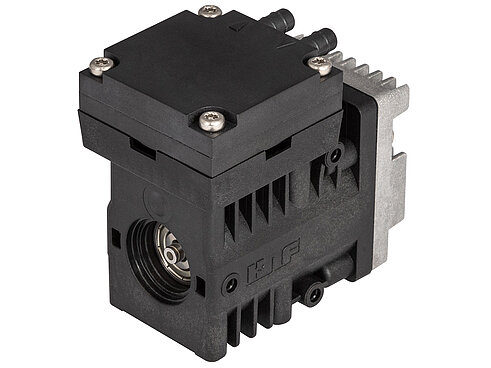
For eye alignment applications, KNF’s NMP 850 is an outstanding option. It is also available with an advanced customizable BLDC motor to provide tight control over vibration and noise level. In addition, the NMP 850 offers a maximum vacuum of 230 mbar (abs.), maximum flow rate of 4.5 l/min, and maximum pressure of 2.5 bar (rel.). It provides long service life for continuous operation, along with compact design.