
Beyond the Pump: How System Components Impact Liquid Pump Performance
Diaphragm pumps are often small, but critical, pieces in large and complex systems. When evaluating a pump, it is essential to understand how other system components, especially near the pump and in the flow path, can impact liquid pump performance.
Liquid diaphragm pumps perform essential roles in systems across a variety of applications. However, pumps do not operate in those systems independently. A variety of system components in the flow path, including valves, nozzles, tubing, and fittings, can have a substantial impact on pump performance. For this reason, it is essential to consider these components when selecting a pump.
A Sytem’s Performance is Not Determined by Pumps Alone
While choosing the right pump for an application is essential to optimizing system operations, it is also necessary to consider how and where that pump fits into a system. Whether the pump is transporting media from a reservoir to a print head in an inkjet application, providing a precise amount for liquid dosing, or extracting a sample for laboratory analysis, it is not working alone. Even the most basic systems have a variety of other components, like valves, nozzles, tubing, and fittings, that can impact flow. This is often not considered when evaluating a pump, but these components can be a major factor in performance.
Components That Impact Pumps are Essential for System Operation
While many system components can impact pump performance, they also serve essential functions. Some of these include:
- Valves: Control media flow and direction, while also isolating media from certain parts of the system during maintenance. This includes Solenoids, which use electromagnets to automatically allow liquid to pass or block media when necessary.
- Nozzles: Allow for smooth transition of liquid between different flow cross sections to help avoid pressure loss.
- Tubing/Piping: Serves as a pathway for the media to be transported through.
- Fittings: Fittings connect tubing and piping to other system components and are used to change flow direction or transition between different piping sizes.
Back Pressure Can Drastically Impact Pump Performance
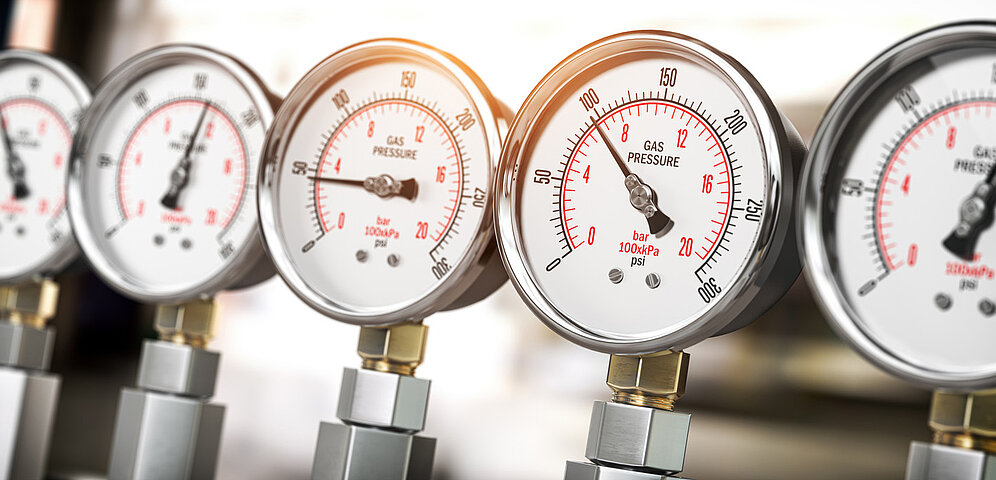
While all these components are important, they can greatly impact the performance of the pump. All of them cause friction, impacting flow, and causing back pressure in the pump. Back pressure is the resistance the pump encounters as fluid is moved through towards the outlet. The resistance caused by closed valves, closed solenoids, nozzles, tubing, and other components further increases this pressure, forcing the pump to work harder to push back against it. Solenoids can be especially problematic, because their electromagnetic nature causes them to close incredibly quickly. This can cause sudden and extreme back pressure spikes, or compression waves, forcing the pump to operate under conditions it is not designed to handle. Sudden changes in pressure can cause bubbles in the liquid to foam and collapse, leading to cavitation, outgassing, or phase transition. Sudden pressure changes can also cause system tubing that is not rigid enough to collapse.
Considering Components During Pump Selection Can Help Prevent Pressure Issues
Regardless of application or system size, it is essential to account for the impact of system components. Most pumps will have their performance impacted by the back pressure caused by these components, so that needs to be considered when looking at pump specifications. Maximum pressure is especially important, as designers must consider the additional pressure the pump will face due to fluid friction or narrow parts in the pump lines. It is also important to consider how the additional strain on the pump will affect flow rate.
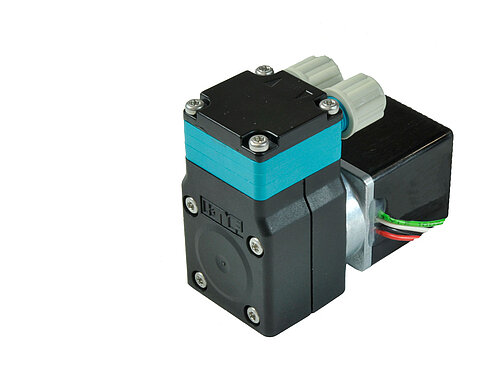
With so many system components impacting performance, and so much variability between systems, a custom-tailored liquid pump solution is essential. Pumps like KNF’s NF 1.60 are available with a variety of material and motor options, including parameterizable brushless DC motors. This allows for precise flow control while also providing error messages in cases where the pump is not working properly. The NF 1.60 offers a maximum flow rate of 0.65 l/min, maximum pressure of 6 bar (rel.) and a maximum suction height of 3 mH2O. Its compact design allows it to fit into a variety of systems, and it is available with an integrated pressure relief valve.
For applications requiring low pulsation, a pump like the FP 70 may be required. It offers a maximum flow rate of 0.7 l/min, maximum pressure of 2 bar (rel.) and a maximum suction height of 3 mH2O. The FP 70 is equipped with KNF’s smooth flow technology, including integrated pulsation dampers and unique valves to limit pulsation. It is also available with a variety of material and motor options.