
Conversion of Manure Pit Emissions Enhances Sustainability
Manure pits present a unique environmental challenge, as they emit large quantities of greenhouse gases. However, those gases can be captured, reducing their environmental impact and allowing them to be converted to useful materials.

New ways to improve environmental sustainability have become more common. One of the biggest focuses of these evolving sustainability operations is the emission of greenhouse gases, which are a major cause of concern in a variety of applications. Agricultural applications are often cited as a major source of greenhouse gas emissions. One major source of these emissions are manure pits, which are a necessity for agriculture involving livestock. However, new initiatives are attempting to repurpose these emissions by converting them into upgraded biogases. Diaphragm pumps are essential for gas transfer in these processes.
Manure Pit Emissions Have a Major Impact on the Environment
Greenhouse gas emissions come from a variety of sources, including burning fossil fuels and various industrial applications. While those are commonly understood causes of these emissions, agricultural applications like manure pits are also known sources of greenhouse gases. Manure pits are designed to store livestock waste for later use as fertilizer for crops.
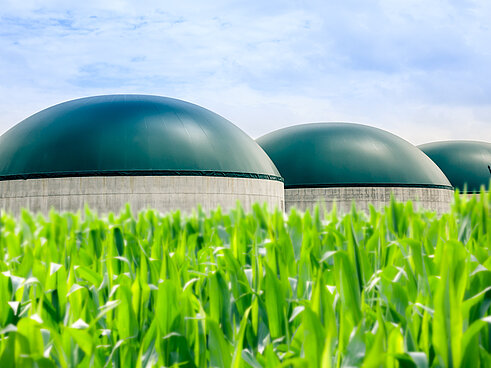
Typically, manure is either stored as a solid in above ground basins or as a liquid slurry in under floor pits. The low oxygen environments in these under floor pits produce biogas, which can be captured for use as an energy for heating or power generation, while also reducing odors and overall emissions. Many agricultural operations have started replacing these styles of manure pits with oxygen-free, or anerobic, storage solutions called digesters.
While they are essential in agricultural operations, manure pits emit substantial amounts of gases like carbon dioxide (CO₂), nitrous oxide (N₂O) and methane (CH₄). This is due to the high oxygen environments of these pits, which leads to aerobic decomposition of manure and excessive manure pit emissions. These gases enter Earth’s atmosphere, leading to increased heat retention.
Gas Conversion Applications Present Several Transfer Challenges
While there are a variety of ways to convert manure pit emissions, most require challenging processes and complex systems. Sometimes, these systems require the capture of emitted gases and transportation to a chiller. There, the gas is cooled, causing moisture and impurities to condense, facilitating their removal. The purified biogases are then liquified for use as an energy carrier.
Other conversion applications involve increasing the pressure of biogases, leading to the adsorption of impurities. Adsorption occurs when molecules adhere to the surface of a material rather than absorbing into it. The vessel containing the biogas is depressurized, gradually removing impurities. This process is called pressure swing adsorption.
These processes are very complex and often require transferring gases through multiple stages. The initially captured gases need to be delivered to the appropriate vessel for conversion. From there, the converted gases and the impurities removed from them need to be transferred to appropriate vessels. These systems require leak tight transfer, ability to transport aggressive gases, and operation in environments where explosion proof pumps are required. Many also require handling wet gases and therefore condensation.
KNF Diaphragm Pumps Excel at Manure Pit Emissions Transfer